

Competitor analysis studies choices

A competitor analysis compares the decisions that influence customer choice and looks for credible spaces where the brand can be different.
Supported bySBA: market research and competitive analysis
The danger of copying the average

Matrices centered on colors and follower counts ignore what matters: who competitors serve, what they promise, how they prove value, and where trust breaks.
How to compare promise, proof, and experience
Include direct competitors, alternatives, and references. Record dated evidence and separate observations from interpretations.
Implementation checklist
- Define the customer decision you need to understand.
- Choose direct, indirect, and substitute competitors.
- Compare offer, price, message, proof, and experience.
- Find repeated codes, gaps, and unsupported claims.
- Turn findings into positioning hypotheses.
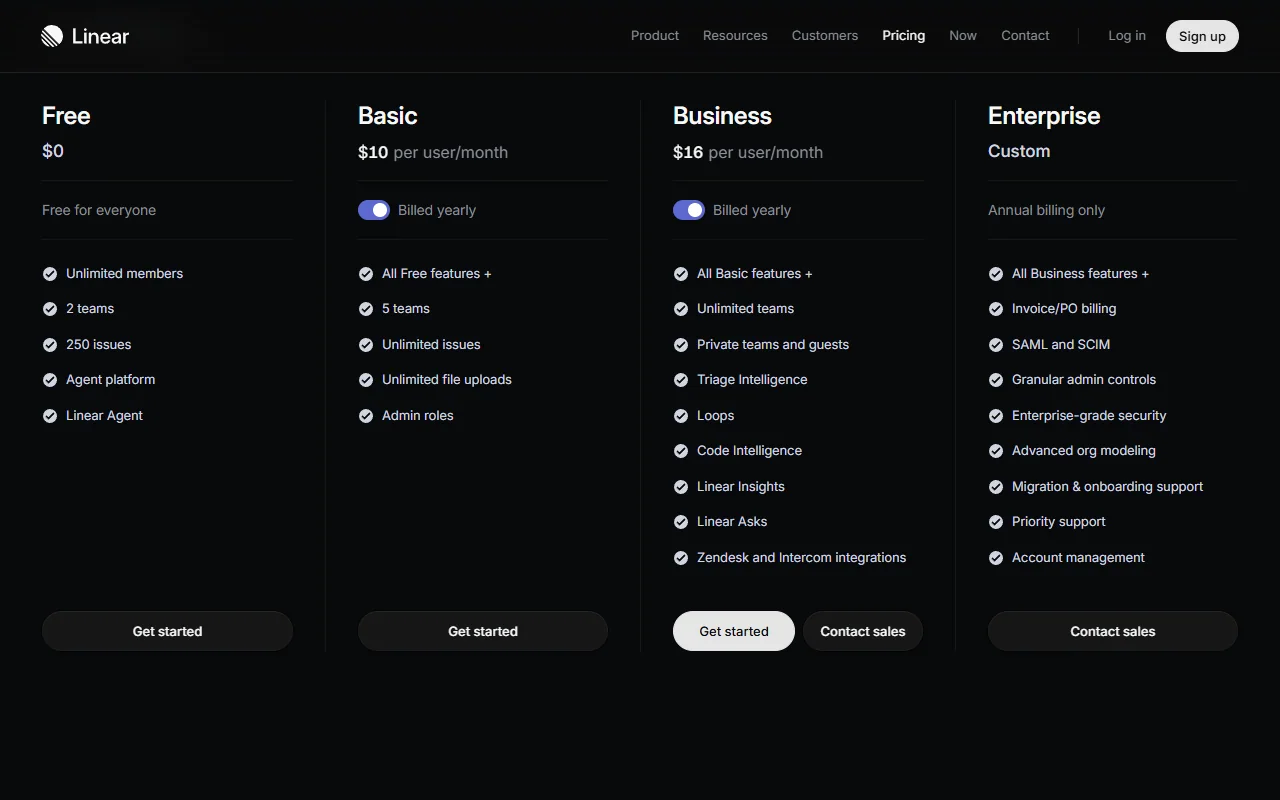
Record what each offering includes and what requires a higher plan.
Source · Linear
Supported byGoogle Trends: understanding its data
Hypotheses that need customer testing
Validate hypotheses through interviews, message tests, search share, conversion, and loss reasons from sales.
Look for decisions, not inspiration
Record what each competitor promises, how it proves the claim, and what it asks people to do next. Visual screenshots without that context become a taste board.
Include substitutes such as solving the problem internally or doing nothing. Inertia is often a stronger competitor than a similar brand.
Frame any open space as a hypothesis and test it with customers. An unused phrase is not proof that the market values it.
Fields for a useful comparison
- Audience and job to be done.
- Promise and mechanism.
- Price, proof, and risk.
- Experience friction.
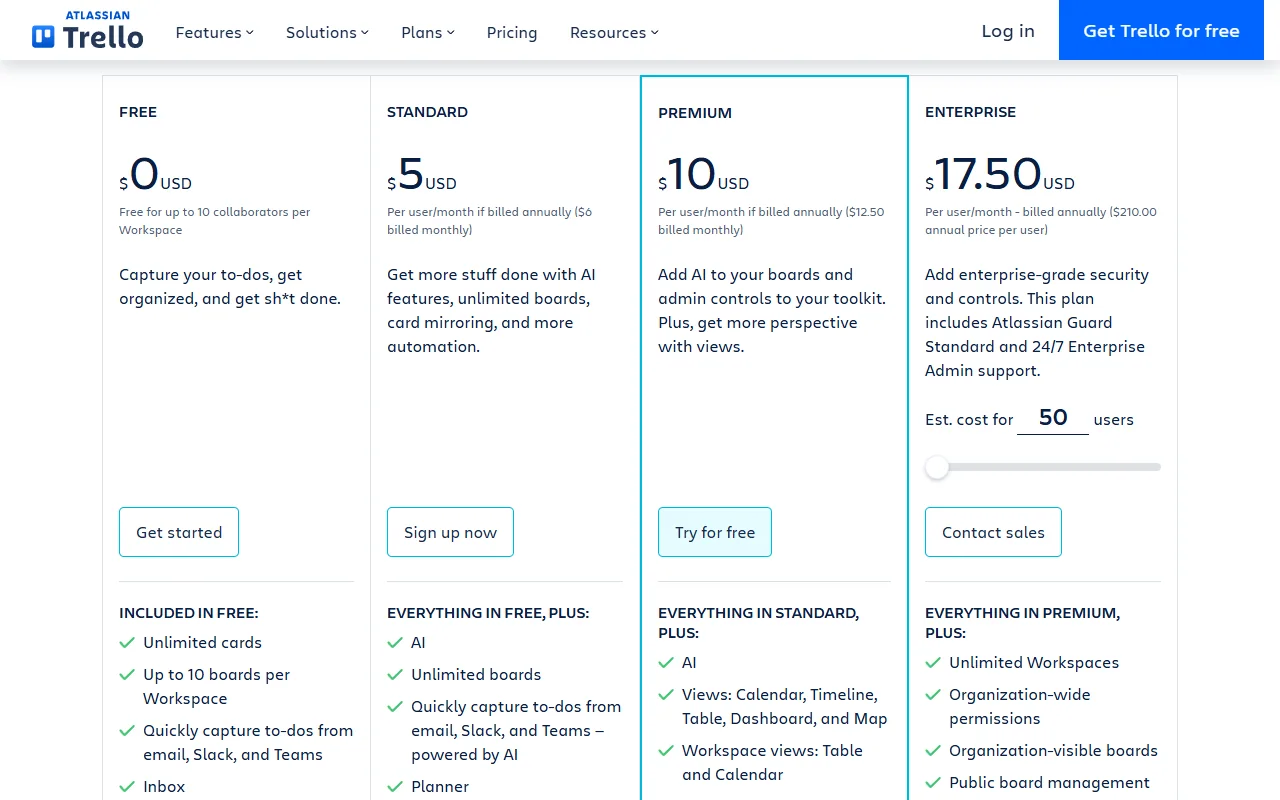
Compare price, promise, and next step using the same buying question.
Source · Trello
Supported byGoogle Search Console: Performance report
Quick execution map
| Element | What to review | Quality signal |
|---|---|---|
| Intent | A competitor analysis compares the decisions that influence customer choice and looks for credible spaces where the brand can be different. | The answer is clear within seconds. |
| Implementation | Include direct competitors, alternatives, and references. Record dated evidence and separate observations from interpretations. | There is one concrete and assignable action. |
| Measurement | Validate hypotheses through interviews, message tests, search share, conversion, and loss reasons from sales. | The data should change a decision. A report with no action adds work. |
Frequently asked questions
What does competitor analysis mean in practice?
A competitor analysis compares the decisions that influence customer choice and looks for credible spaces where the brand can be different.
What is a sensible first step for competitor analysis?
Define the customer decision you need to understand. Then continue with this action: Choose direct, indirect, and substitute competitors.
Which problem should competitor analysis prevent?
Matrices centered on colors and follower counts ignore what matters: who competitors serve, what they promise, how they prove value, and where trust breaks.
How do you measure progress with competitor analysis?
Validate hypotheses through interviews, message tests, search share, conversion, and loss reasons from sales.