

Keyword research starts with real questions
Keyword research turns real questions into page and content priorities based on intent, business value, and the ability to answer better than existing results.
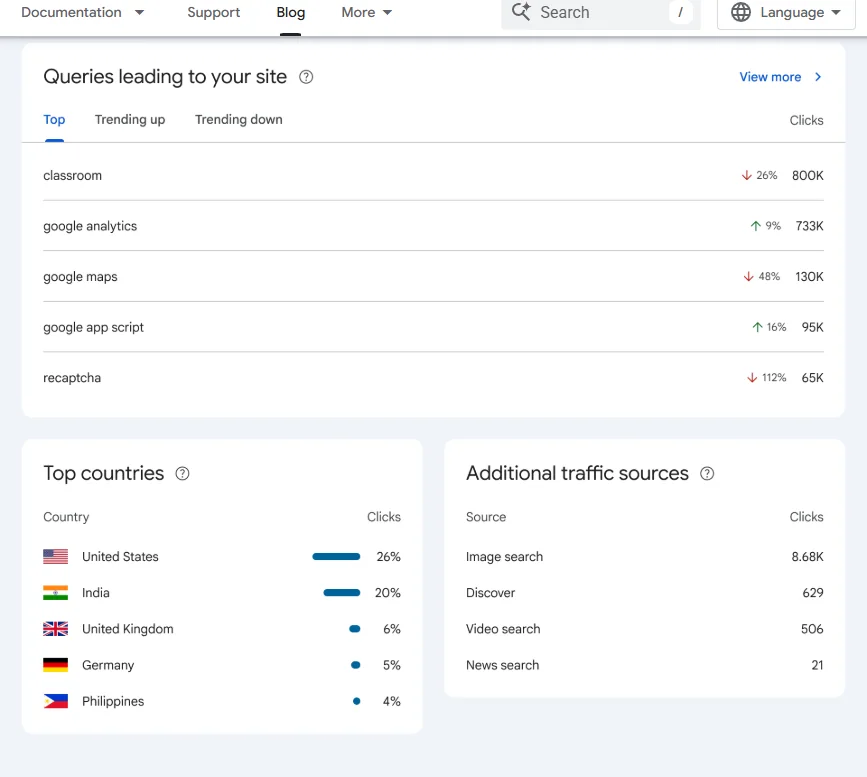
Queries already reaching the site help reveal questions and priorities.
Source · Google Search Central
Supported byGoogle Search Central: SEO Starter Guide
Why volume can mislead a small business
Exporting thousands of terms creates a list, not a strategy. Without context, teams publish topics that attract poor-fit visits or compete with one another.
How to group intent and page
Start with customer conversations, Search Console, internal searches, and current results. Group by problem and decision before looking at volume.
Implementation checklist
- Collect questions from sales, support, and customers.
- Expand terms and inspect real search results.
- Classify intent and decision stage.
- Group variants that deserve one page.
- Prioritize usefulness, attainable authority, and commercial value.
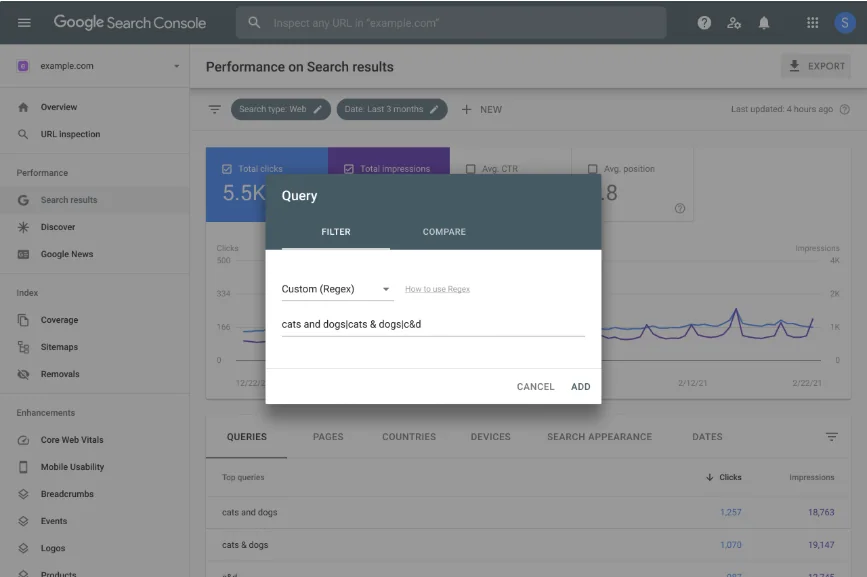
Grouping variants lets you study an intent without creating a page for every phrase.
Source · Google Search Central
Supported byGoogle Search Console: Performance report
Prioritization that connects SEO and sales
Measure intent coverage, impressions, clicks, new queries, assisted conversions, and cannibalization across pages.
Research decisions, not word lists
Start with questions from sales, support, and customers. Tools expand the vocabulary, but they do not know which queries precede a profitable purchase.
Group terms that one page can satisfy. Creating a URL for every variation splits signals and produces nearly identical content.
Prioritize relevance, intent, and ability to compete alongside volume. A small query close to the service is often worth more than a large, poorly matched audience.
Columns for prioritization
- Problem and intent.
- Page that should answer.
- Business value.
- Difficulty and available evidence.
Supported byGoogle Trends: understanding its data
Quick execution map
| Element | What to review | Quality signal |
|---|---|---|
| Intent | Keyword research turns real questions into page and content priorities based on intent, business value, and the ability to answer better than existing results. | The answer is clear within seconds. |
| Implementation | Start with customer conversations, Search Console, internal searches, and current results. Group by problem and decision before looking at volume. | There is one concrete and assignable action. |
| Measurement | Measure intent coverage, impressions, clicks, new queries, assisted conversions, and cannibalization across pages. | The data should change a decision. A report with no action adds work. |
Frequently asked questions
What does keyword research for small business mean in practice?
Keyword research turns real questions into page and content priorities based on intent, business value, and the ability to answer better than existing results.
What is a sensible first step for keyword research for small business?
Collect questions from sales, support, and customers. Then continue with this action: Expand terms and inspect real search results.
Which problem should keyword research for small business prevent?
Exporting thousands of terms creates a list, not a strategy. Without context, teams publish topics that attract poor-fit visits or compete with one another.
How do you measure progress with keyword research for small business?
Measure intent coverage, impressions, clicks, new queries, assisted conversions, and cannibalization across pages.