A newsletter needs an editorial promise
A newsletter needs a clear editorial promise, sustainable frequency, basic segmentation, and CTAs connected to the business.

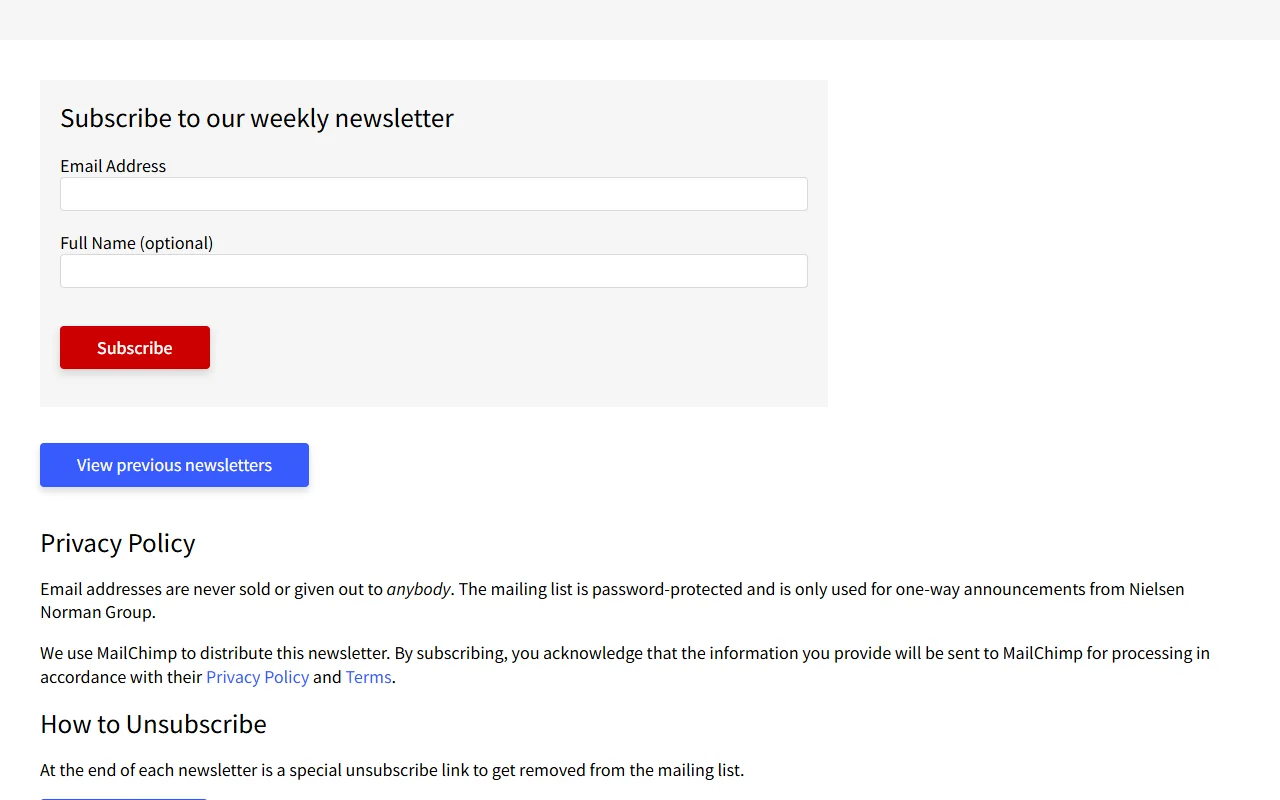
The signup explains what readers will receive and when.
Source · Nielsen Norman Group
Why sending from habit exhausts the list
Sending just to send creates fatigue. Useful consistency builds a relationship that does not depend on the algorithm.
How to choose sections and frequency
Define the newsletter's role in the system: educate, nurture, activate, retain, or sell.
Implementation checklist
- Write a value promise for subscribers.
- Choose fixed sections and a realistic frequency.
- Segment by interest or stage when possible.
- Repurpose content without copying it fully.
- Measure replies, actions, and opens together.
Supported bydefining a clear theme and sustainable cadencedeliverability requirements for newsletters
Measures that reveal genuine interest
Measure list growth, clicks, replies, unsubscribes, assisted leads, sales, and topics that create conversation.

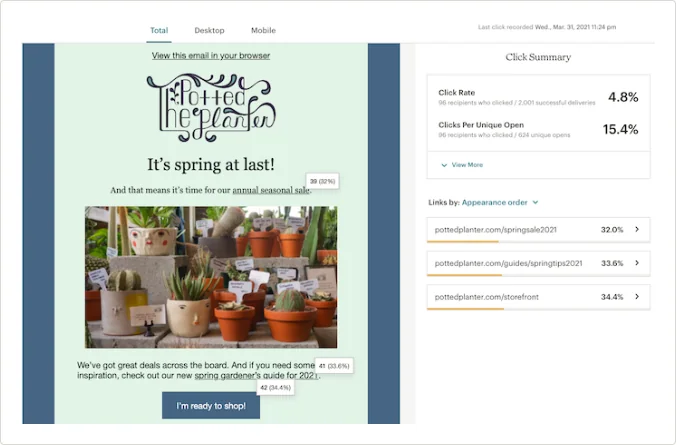
The map shows which links attract attention within the email.
Source · Mailchimp
The editorial promise should fit into the subscription decision
A newsletter needs to say what it sends, for whom, and how often. Stay up to date is not enough. People already have too many ways to stay current. A specific promise sets an expectation and forces the team to reject content that does not fit.
Design sections you can sustain. One original observation, one tool, and one question may be enough. Do not fill the email with summaries that only push traffic. Deliver a complete idea and invite deeper reading when it helps.
Treat replies and unsubscribes as research. A click signals interest, but a reply explains why. Review which editions produce conversations, inquiries, or use. Opens have become an imperfect signal and should not govern the program alone.
Minimum contract with the subscriber
- Topic, usefulness, and frequency stated before signup.
- Visible, functional consent and unsubscribe controls.
- A recognizable sender and reply address.
- An archive or preference that helps people recover useful content.

Supported bylegal unsubscribe and sender-transparency requirements
Quick execution map
| Element | What to review | Quality signal |
|---|---|---|
| Intent | A newsletter needs a clear editorial promise, sustainable frequency, basic segmentation, and CTAs connected to the business. | The answer is clear within seconds. |
| Implementation | Define the newsletter's role in the system: educate, nurture, activate, retain, or sell. | There is one concrete and assignable action. |
| Measurement | Measure list growth, clicks, replies, unsubscribes, assisted leads, sales, and topics that create conversation. | The data should change a decision. A report with no action adds work. |
Frequently asked questions
What does newsletter strategy mean in practice?
A newsletter needs a clear editorial promise, sustainable frequency, basic segmentation, and CTAs connected to the business.
What is a sensible first step for newsletter strategy?
Write a value promise for subscribers. Then continue with this action: Choose fixed sections and a realistic frequency.
Which problem should newsletter strategy prevent?
Sending just to send creates fatigue. Useful consistency builds a relationship that does not depend on the algorithm.
How do you measure progress with newsletter strategy?
Measure list growth, clicks, replies, unsubscribes, assisted leads, sales, and topics that create conversation.