

The site should help people hire you

A personal brand website should clarify the specialty, show evidence, explain how to work with you, and let an interested person take the next step.
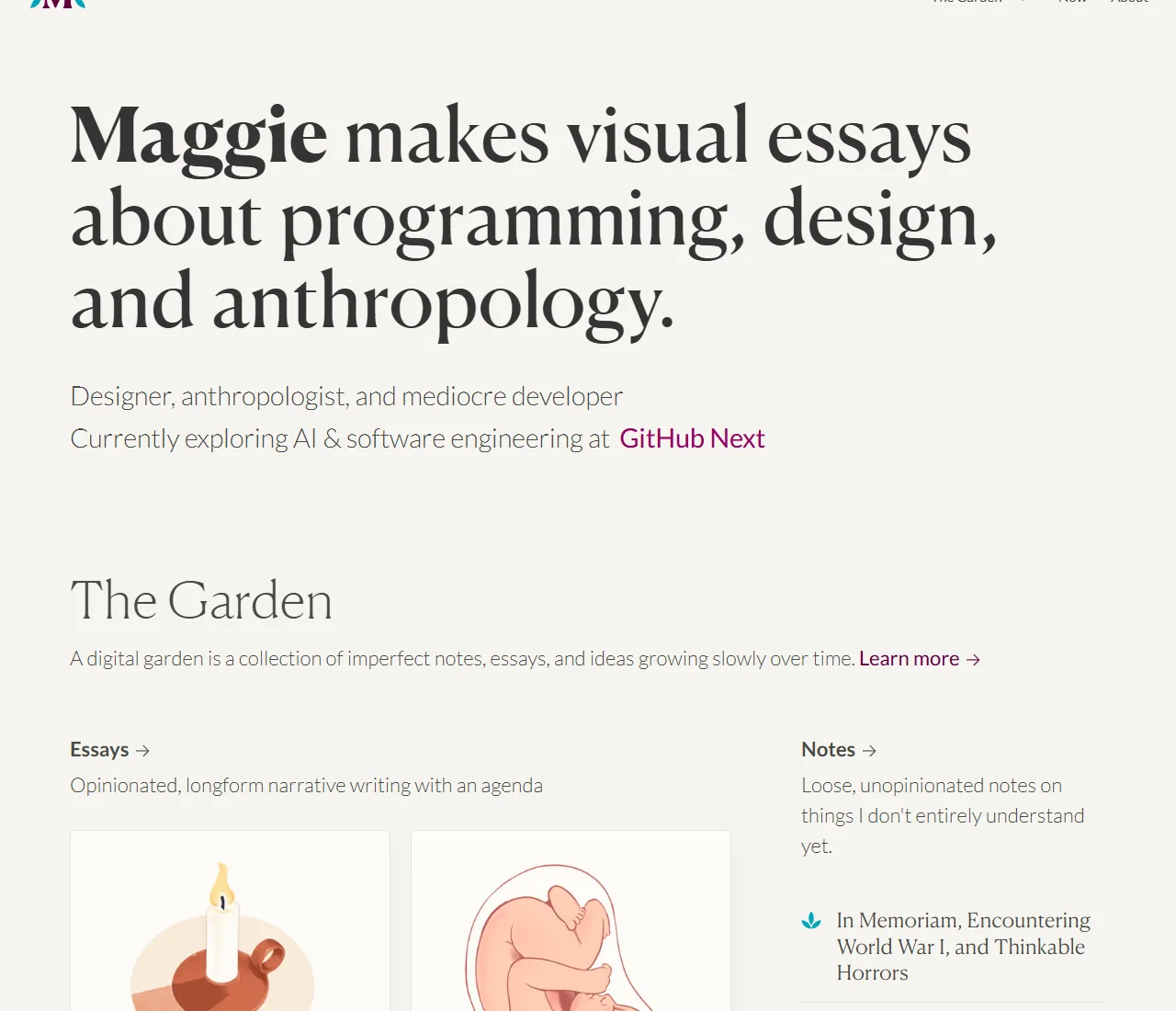
A brief introduction alongside published work helps explain the specialty.
Source · Maggie Appleton
Supported byGoogle Search Central: helpful, people-first content
What gets in the way when the homepage tells a life story
A bio and scattered links force visitors to reconstruct your story. Attention disappears when the offer has no clear home.
How to order promise, work, and contact

Design around decisions: understand, trust, explore, and contact. Publish work that demonstrates judgment instead of activity alone.
Implementation checklist
- Write a specific promise for the homepage.
- Show cases, results, publications, or verifiable credentials.
- Explain services, formats, and who you do not help.
- Build an idea library with permanent URLs.
- Offer simple contact with response expectations.
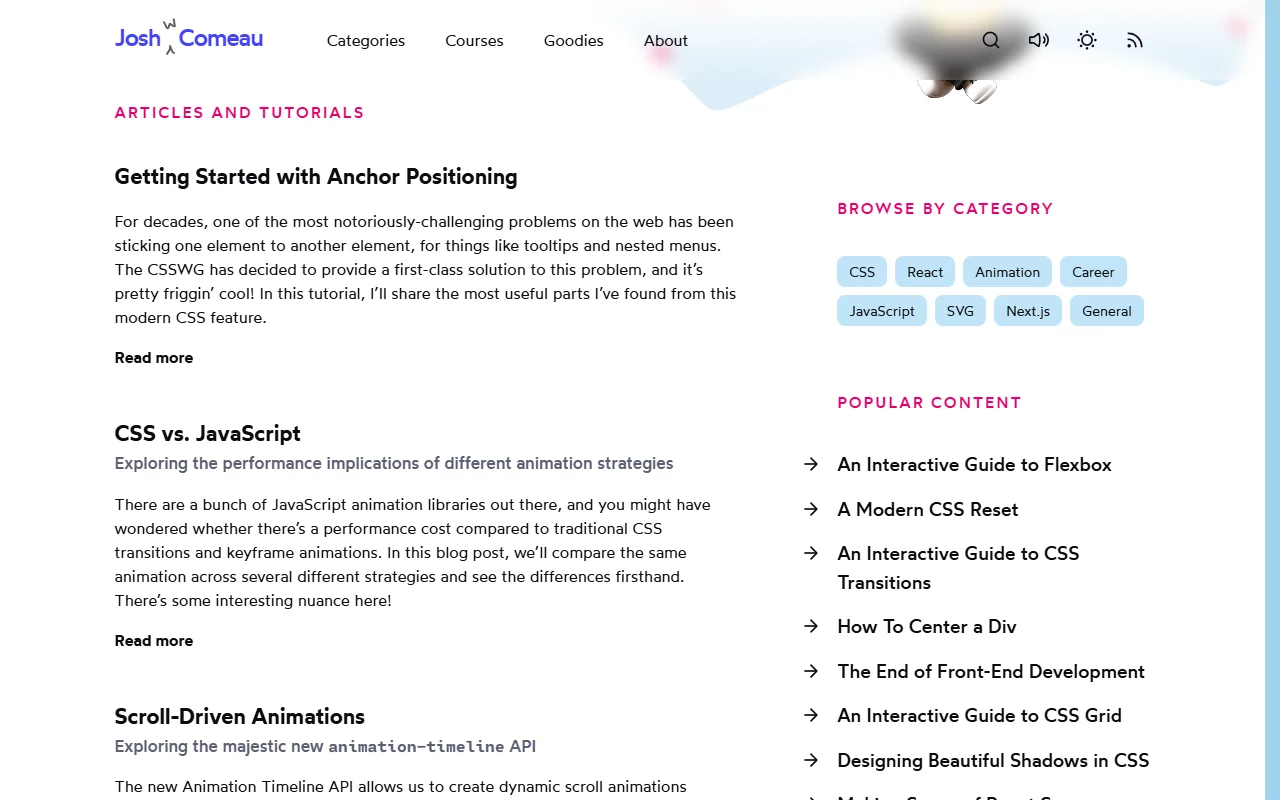
Original publications demonstrate judgment and give readers a way to explore.
Source · Josh W. Comeau
Supported byStanford: web credibility guidelines
Signals that the right audience is arriving
Measure name searches, direct visits, content reads, qualified inquiries, subscriptions, and assisted opportunities.
Design the site around one decision
A personal brand homepage does not need to tell an entire life story. It should help the right person understand what you do, for whom, and why to trust you.
Separate evidence from self-promotion. Cases, samples, results, and a well-supported point of view carry more weight than a list of adjectives.
Choose one primary action based on the business model: hire, book, subscribe, or read. Four equally weighted calls to action dilute intent.
Blocks that earn their place
- A precise homepage promise.
- Work or results people can inspect.
- A biography relevant to the offer.
- Contact details with clear expectations.
Supported byGoogle Search Central: organization structured data
Quick execution map
| Element | What to review | Quality signal |
|---|---|---|
| Intent | A personal brand website should clarify the specialty, show evidence, explain how to work with you, and let an interested person take the next step. | The answer is clear within seconds. |
| Implementation | Design around decisions: understand, trust, explore, and contact. Publish work that demonstrates judgment instead of activity alone. | There is one concrete and assignable action. |
| Measurement | Measure name searches, direct visits, content reads, qualified inquiries, subscriptions, and assisted opportunities. | The data should change a decision. A report with no action adds work. |
Frequently asked questions
What does personal brand website mean in practice?
A personal brand website should clarify the specialty, show evidence, explain how to work with you, and let an interested person take the next step.
What is a sensible first step for personal brand website?
Write a specific promise for the homepage. Then continue with this action: Show cases, results, publications, or verifiable credentials.
Which problem should personal brand website prevent?
A bio and scattered links force visitors to reconstruct your story. Attention disappears when the offer has no clear home.
How do you measure progress with personal brand website?
Measure name searches, direct visits, content reads, qualified inquiries, subscriptions, and assisted opportunities.