
A pricing page should reduce uncertainty

A pricing page should show options, differences, limits, trust signals, and a clear path to choose or ask.
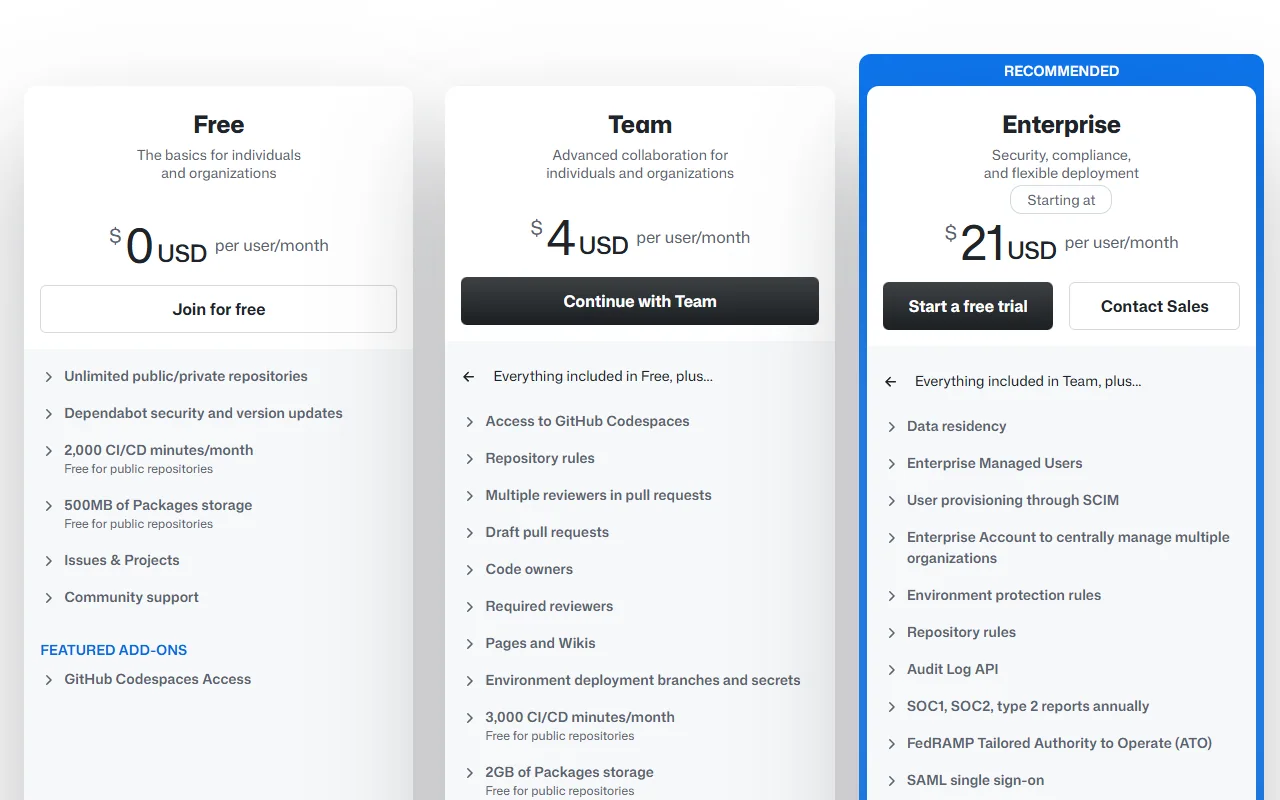
Explain who each plan serves beside its price.
Source · GitHub
Supported bycomparing pricing models by value and usage
What happens when cost appears without context
Hidden prices can stop contact; poorly explained prices can attract the wrong leads or create unrealistic expectations.
Supported byevidence on the harm of revealing fees late
How to explain plans, limits, and choice

Organize plans by need and explain price within that choice. Clarify when a custom solution is more appropriate.
Implementation checklist
- Name each plan by outcome or stage.
- Show what is included and excluded.
- Highlight the recommended plan with a reason.
- Answer contract, timing, and support questions.
- Connect each CTA to proper follow-up.
Metrics for understanding comparison
Measure clicks by plan, qualified inquiries, price objections, upgrades, and close rate by plan type.
Price needs enough context for comparison
Hiding every price reference may increase inquiries while making most of them worse. When scope varies, publish a range, starting price, or the factors behind a quote. People need to know whether they are in the right order of magnitude before sharing their details.
Present plan differences through consequences rather than endless feature lists. Explain whom each option serves, which work the customer owns, and what happens beyond limits. A table only works when labels make sense without a call.
Include taxes, currency, recurrence, and terms before the CTA. If purchase requires a diagnosis, say what the person will receive in that conversation. Book a call does not explain whether the meeting is a sale, assessment, or consultation.
Questions the page should answer
- What the price includes and what is quoted separately.
- When charges occur, in which currency, and with what recurrence.
- Which plan fits each common situation.
- What happens after purchase or a quote request.
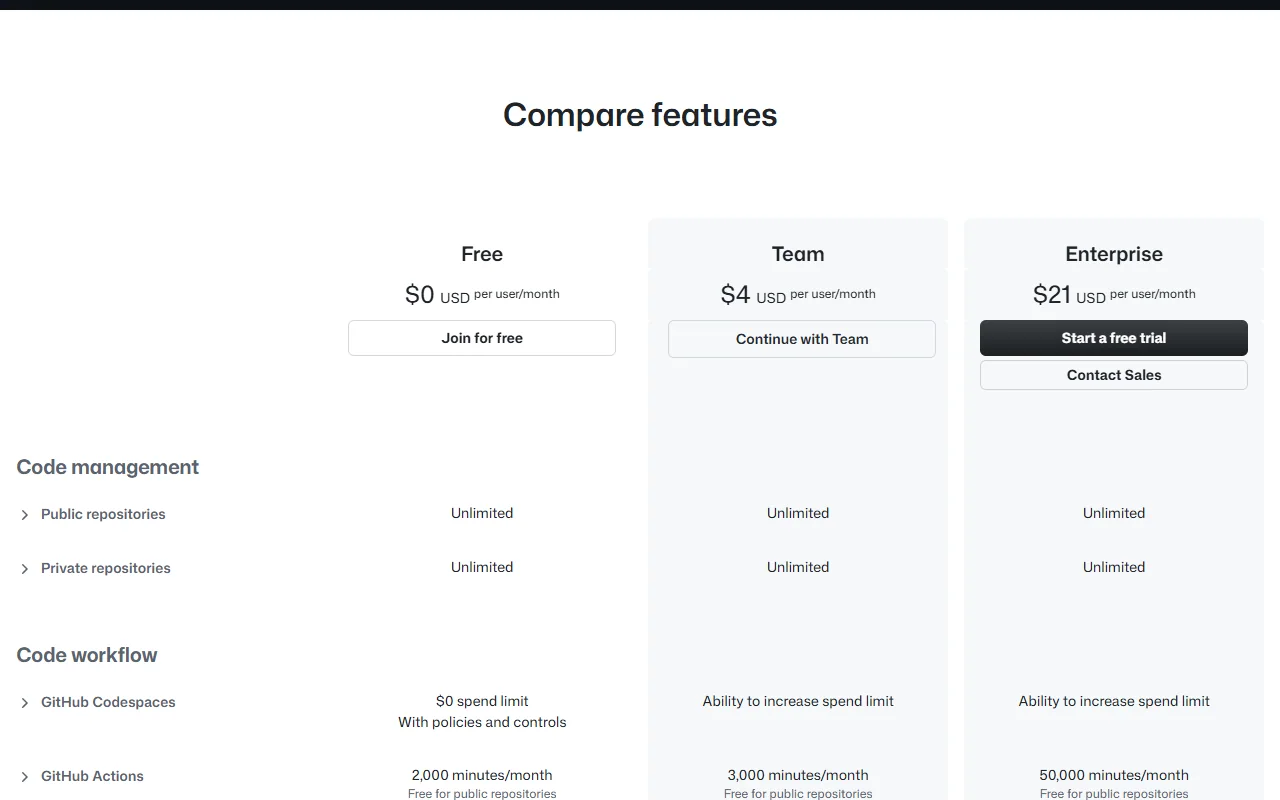
A useful table lets people check the differences between options.
Source · GitHub
Supported bytransparency for total prices and mandatory fees
Quick execution map
| Element | What to review | Quality signal |
|---|---|---|
| Intent | A pricing page should show options, differences, limits, trust signals, and a clear path to choose or ask. | The answer is clear within seconds. |
| Implementation | Organize plans by need and explain price within that choice. Clarify when a custom solution is more appropriate. | There is one concrete and assignable action. |
| Measurement | Measure clicks by plan, qualified inquiries, price objections, upgrades, and close rate by plan type. | The data should change a decision. A report with no action adds work. |
Frequently asked questions
What does pricing page mean in practice?
A pricing page should show options, differences, limits, trust signals, and a clear path to choose or ask.
What is a sensible first step for pricing page?
Name each plan by outcome or stage. Then continue with this action: Show what is included and excluded.
Which problem should pricing page prevent?
Hidden prices can stop contact; poorly explained prices can attract the wrong leads or create unrealistic expectations.
How do you measure progress with pricing page?
Measure clicks by plan, qualified inquiries, price objections, upgrades, and close rate by plan type.