
Where SEO and brand meet

SEO for brands works when it helps people find useful answers and understand why a brand is a good option. Technical optimization matters, but it cannot compensate for weak, generic content disconnected from the real offer.
Google emphasizes useful, reliable, people-first content. For a brand, that means writing from experience, organizing information well, and showing judgment. Repeating the main topic does not provide that proof.
The problem with traffic that creates no recall

When a brand has a clear voice, content stops sounding interchangeable. Every article, landing page, and FAQ can build recognition in addition to traffic.
Personality should not sacrifice clarity. The best branded SEO content combines crawlable structure with examples, point of view, own vocabulary, and internal links that guide the user to the next step.
Signals that strengthen SEO and brand
- Descriptive titles with clear intent.
- Direct answers before long explanations.
- Proof, criteria, examples, and real cases.
- Internal link architecture by topic and service.
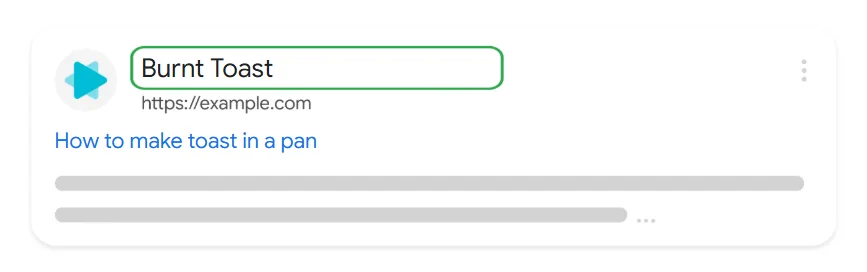
The site name identifies the source before someone opens the result.
Source · Google Search Central · Site names
Supported byoriginal and trustworthy content strengthens brand authority
Content that answers and builds reputation
Search is shifting toward summarized answers, assistants, and AI experiences. To compete there, content should be easy to interpret: clear headings, definitions, tables, visible FAQs, and structured data where appropriate.
That does not mean abusing schema. For example, Google no longer shows FAQ rich results for general sites, although FAQs are still useful for users and systems trying to understand the page.
Supported byGoogle checks site names against consistent identity signals
How to measure demand and discovery
For blog articles, `BlogPosting` helps describe the title, date, author, image, and topic. Breadcrumbs and correct canonicals also matter for localized versions.
The rule is simple: structured data should reflect visible content. It should not promise things the page does not show or try to turn weak content into a rich result.
Be findable without sounding like everyone else
Search language is a research source, not a script to repeat word for word. It shows how people name the problem, what they compare, and what they fear. The brand then decides which language to adopt, explain, or avoid because it does not match how the company works.
A page can answer a query precisely and keep its personality. The key is separating clarity from tone. The title and opening paragraphs should resolve intent. Examples, criteria, and opinions can demonstrate experience without hiding the answer behind a theatrical introduction.
Review the promise shown in the result and what people find after the click. If the title offers a guide and the page immediately pushes a sale, the click feels deceptive. SEO and brand align when the expectation created in search is fulfilled on the page.
Review a page for brand and search
- Make sure the title and description represent visible content.
- Answer the primary query before presenting the offer.
- Replace generic claims with owned examples and criteria.
- Keep the same promise across result, page, and call to action.
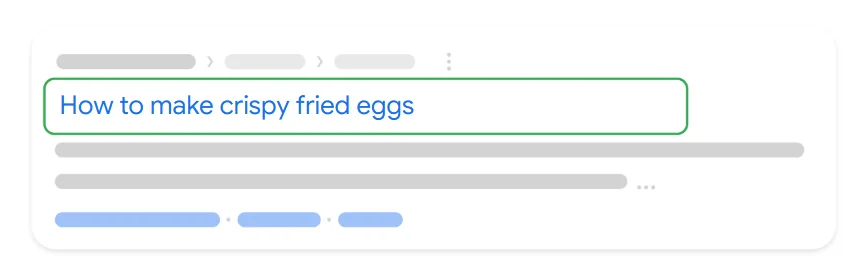
The title should accurately preview what the person will find.
Source · Google Search Central · Title links
Supported bydescriptive and concise titles for each page
Final table: technical SEO + branding
| Layer | What to do | Risk if ignored |
|---|---|---|
| Topic | Define the main intent and natural variations | Scattered or over-optimized content |
| Brand | Keep voice, stance, and own examples | Generic text nobody remembers |
| Structure | Use H2/H3, tables, FAQs, and internal links | Harder reading and weaker understanding |
| Metadata | Care for title, description, canonical, and alternates | Poor snippets or confusing URLs |
| Schema | Use BlogPosting and breadcrumbs when relevant | Less context for search engines and assistants |
Frequently asked questions
What is SEO for brands?
It is the practice of optimizing content, structure, and experience so a brand is easier to find, understand, and choose in search engines and answer systems.
Can SEO content have personality?
Yes. It should. Personality helps differentiate the brand as long as it does not sacrifice clarity, accuracy, or usefulness for the user.
Are FAQs still worth including if Google does not show FAQ rich results?
Yes, when they answer real questions. FAQs still help users, sales, support, and content comprehension, even if they should not be sold as a rich-result guarantee.
What structured data should a blog use?
For editorial articles, `BlogPosting` and `BreadcrumbList` are usually appropriate when they reflect visible content such as title, date, author, image, and navigation hierarchy.