
A brand audit should end in priorities

A brand audit compares what the company promises, what it communicates, and what people experience to find gaps that hurt trust and sales.
Supported bySBA: market research and competitive analysis
How to separate symptoms from causes
Teams often fix logos or social posts when the real problem is a vague promise, an offer that is hard to compare, or an inconsistent experience.
Evidence to collect before forming an opinion

Collect evidence across business, audience, competition, communication, and experience. Score each finding by impact and effort before proposing changes.
Implementation checklist
- Document goals, offers, and profitable customers.
- Review messaging, identity, and tone across channels.
- Compare the promise with reviews, sales, and support.
- Find gaps against direct competitors.
- Prioritize three corrections for the next 90 days.
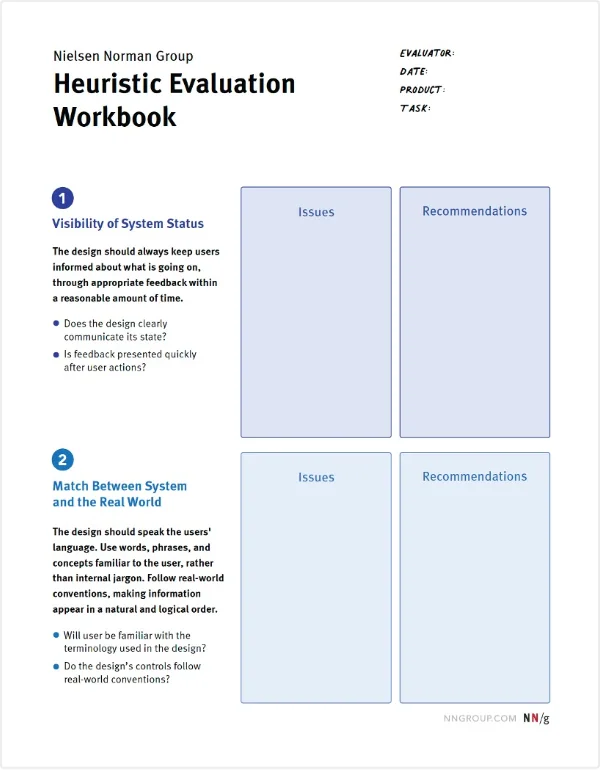
Document the observed issue before proposing a solution.
Source · Nielsen Norman Group
Supported byGOV.UK: user research
The score that orders the next 90 days
Measure branded search, conversion, perceived clarity in interviews, sales objections, repeat purchase, and consistency across channels.
Turn the audit into decisions
An audit works when it compares evidence, not opinions. Save examples from messaging, calls, reviews, and pages so every finding can be checked.
Separate symptoms from causes. Low conversion may come from a vague offer, weak proof, or operational friction; changing colors rarely fixes all three.
Finish with three priorities, an owner, and a date. A forty-item report with no order simply hands the problem back to the team.
Deliverables that move the work
- A dated touchpoint inventory.
- Evidence-linked gaps.
- An impact and effort matrix.
- A 90-day plan with owners.
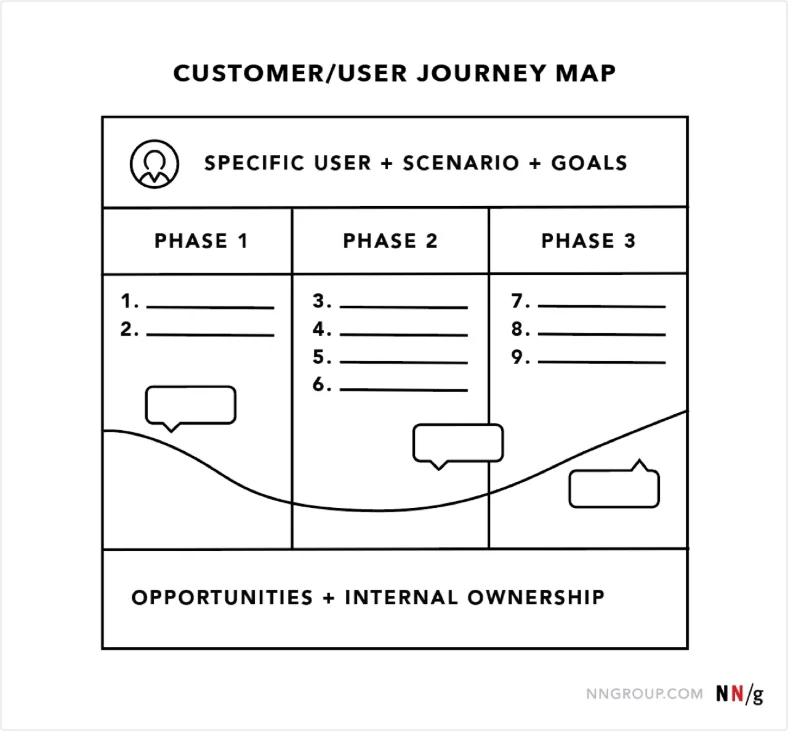
The journey helps compare the promise with each touchpoint.
Source · Nielsen Norman Group
Supported byStanford: web credibility guidelines
Quick execution map
| Element | What to review | Quality signal |
|---|---|---|
| Intent | A brand audit compares what the company promises, what it communicates, and what people experience to find gaps that hurt trust and sales. | The answer is clear within seconds. |
| Implementation | Collect evidence across business, audience, competition, communication, and experience. Score each finding by impact and effort before proposing changes. | There is one concrete and assignable action. |
| Measurement | Measure branded search, conversion, perceived clarity in interviews, sales objections, repeat purchase, and consistency across channels. | The data should change a decision. A report with no action adds work. |
Frequently asked questions
What does brand audit mean in practice?
A brand audit compares what the company promises, what it communicates, and what people experience to find gaps that hurt trust and sales.
What is a sensible first step for brand audit?
Document goals, offers, and profitable customers. Then continue with this action: Review messaging, identity, and tone across channels.
Which problem should brand audit prevent?
Teams often fix logos or social posts when the real problem is a vague promise, an offer that is hard to compare, or an inconsistent experience.
How do you measure progress with brand audit?
Measure branded search, conversion, perceived clarity in interviews, sales objections, repeat purchase, and consistency across channels.