Employer brand starts with the experience

A clear employer brand explains the work the company offers, what it expects, how it supports growth, and what it is still improving.
Supported byGOV.UK: user research
A campaign does not fix poor conditions
Claims about a great environment attract little when job posts omit pay, process, responsibilities, and real working conditions.
How to research and communicate the real job

Build the promise through interviews with people who stayed and people who left. Fix the experience gaps doing the most damage before promoting it.
Implementation checklist
- Map expectations and reality from job post to exit.
- Find honest reasons to join and stay.
- Write job posts with clear responsibilities and process.
- Align interview, offer, and onboarding with the promise.
- Publish concrete stories instead of culture slogans.
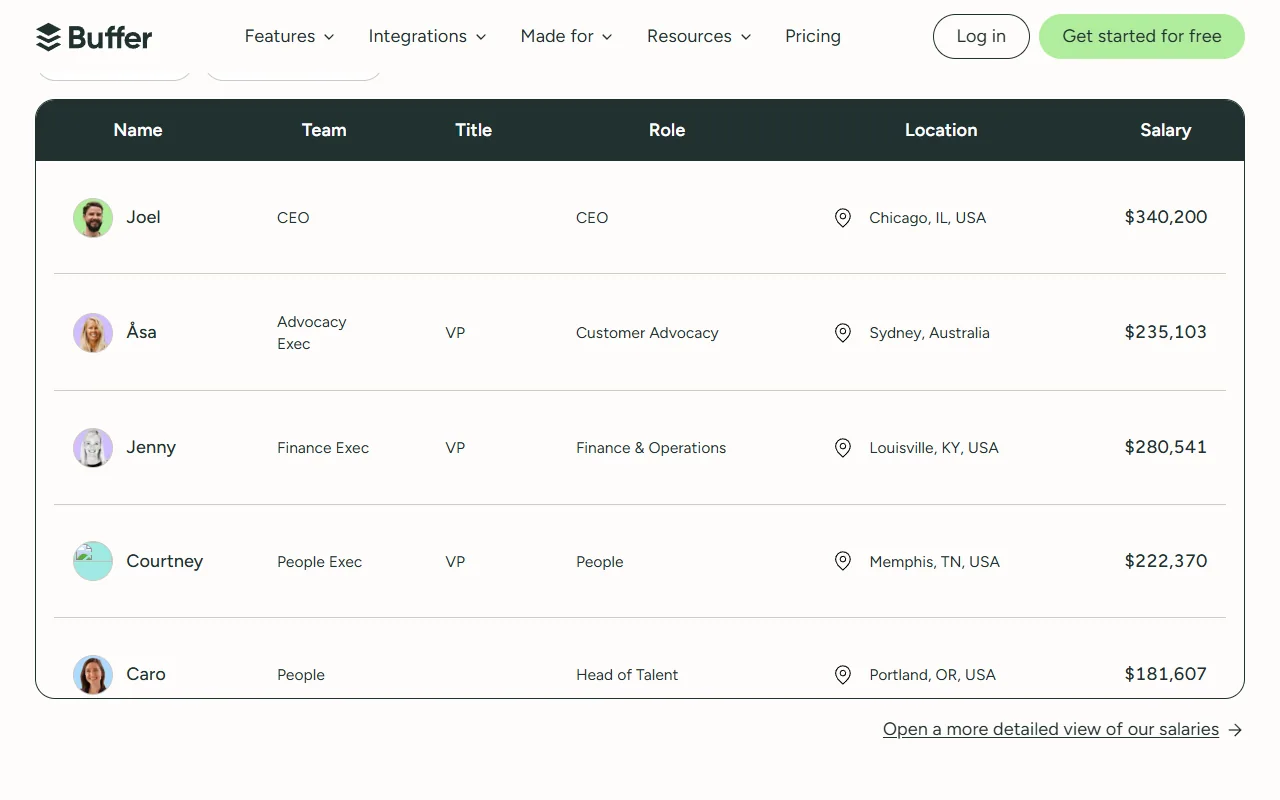
An example of employment conditions published in detail.
Source · Buffer
Supported bySBA: write your business plan
Measures for hiring and retention
Measure qualified applicants, offer acceptance, time to hire, early retention, and gaps between promise and experience.
Promise only the experience you can sustain
Employer brand starts with schedules, leadership, and processes, not a recruiting campaign. Advertising a culture that does not exist speeds up disappointment.
Interview people who stay and people who left. Look for concrete patterns around autonomy, learning, recognition, and workload.
Publish conditions, expectations, and limits plainly. A candidate who opts out after honest information prevents a poor hire.
Evidence for employment messaging
- Verifiable employee stories.
- Clear role expectations.
- An explained hiring process.
- Responses to reviews and problems.
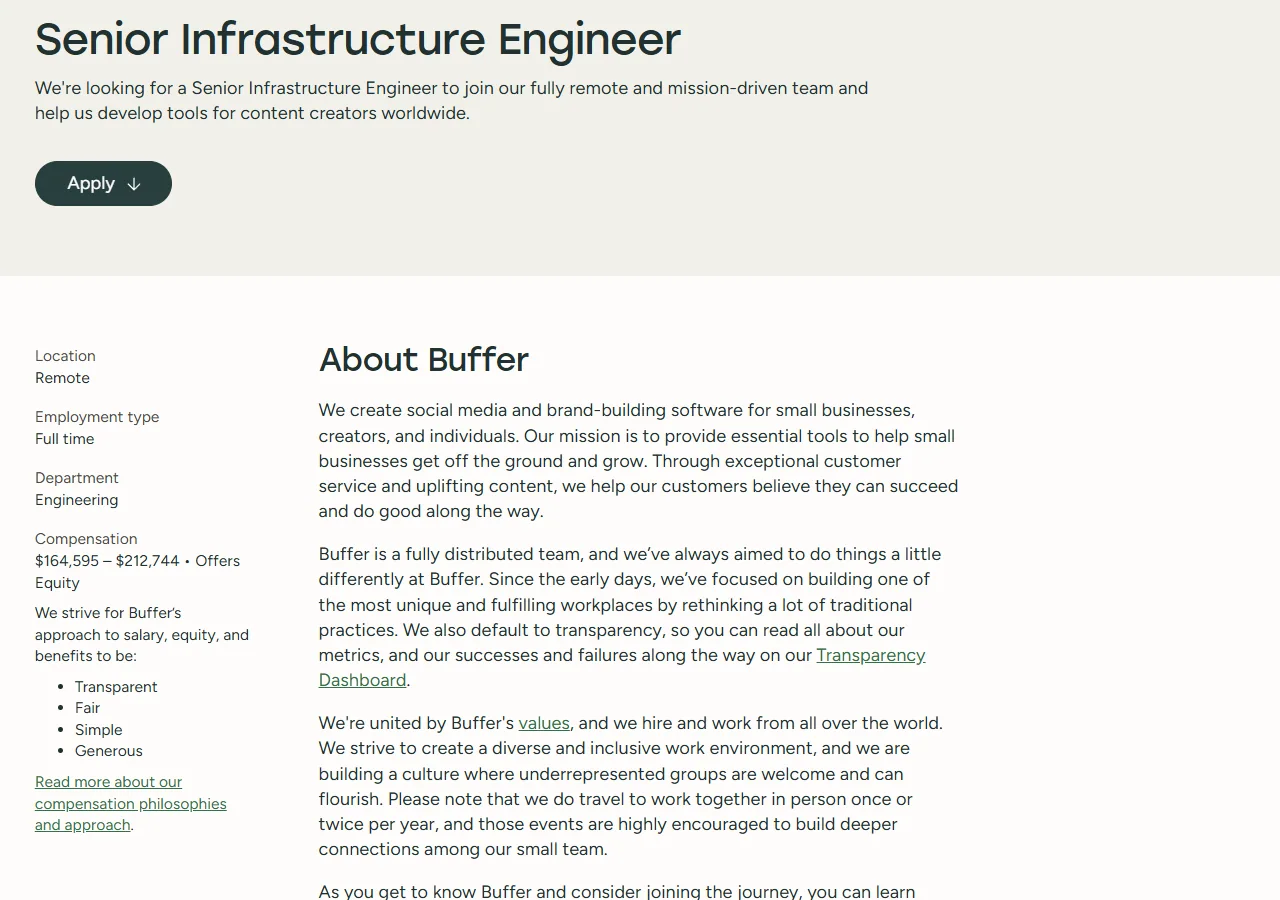
The listing explains what the role offers before asking for an application.
Source · Buffer
Supported byMailchimp: writing principles and voice
Quick execution map
| Element | What to review | Quality signal |
|---|---|---|
| Intent | A clear employer brand explains the work the company offers, what it expects, how it supports growth, and what it is still improving. | The answer is clear within seconds. |
| Implementation | Build the promise through interviews with people who stayed and people who left. Fix the experience gaps doing the most damage before promoting it. | There is one concrete and assignable action. |
| Measurement | Measure qualified applicants, offer acceptance, time to hire, early retention, and gaps between promise and experience. | The data should change a decision. A report with no action adds work. |
Frequently asked questions
What does employer branding for small business mean in practice?
A clear employer brand explains the work the company offers, what it expects, how it supports growth, and what it is still improving.
What is a sensible first step for employer branding for small business?
Map expectations and reality from job post to exit. Then continue with this action: Find honest reasons to join and stay.
Which problem should employer branding for small business prevent?
Claims about a great environment attract little when job posts omit pay, process, responsibilities, and real working conditions.
How do you measure progress with employer branding for small business?
Measure qualified applicants, offer acceptance, time to hire, early retention, and gaps between promise and experience.