The homepage should answer three questions

A homepage should say what you do, who it is for, why visitors should trust you, and what to do next, with clear routes to primary offers.
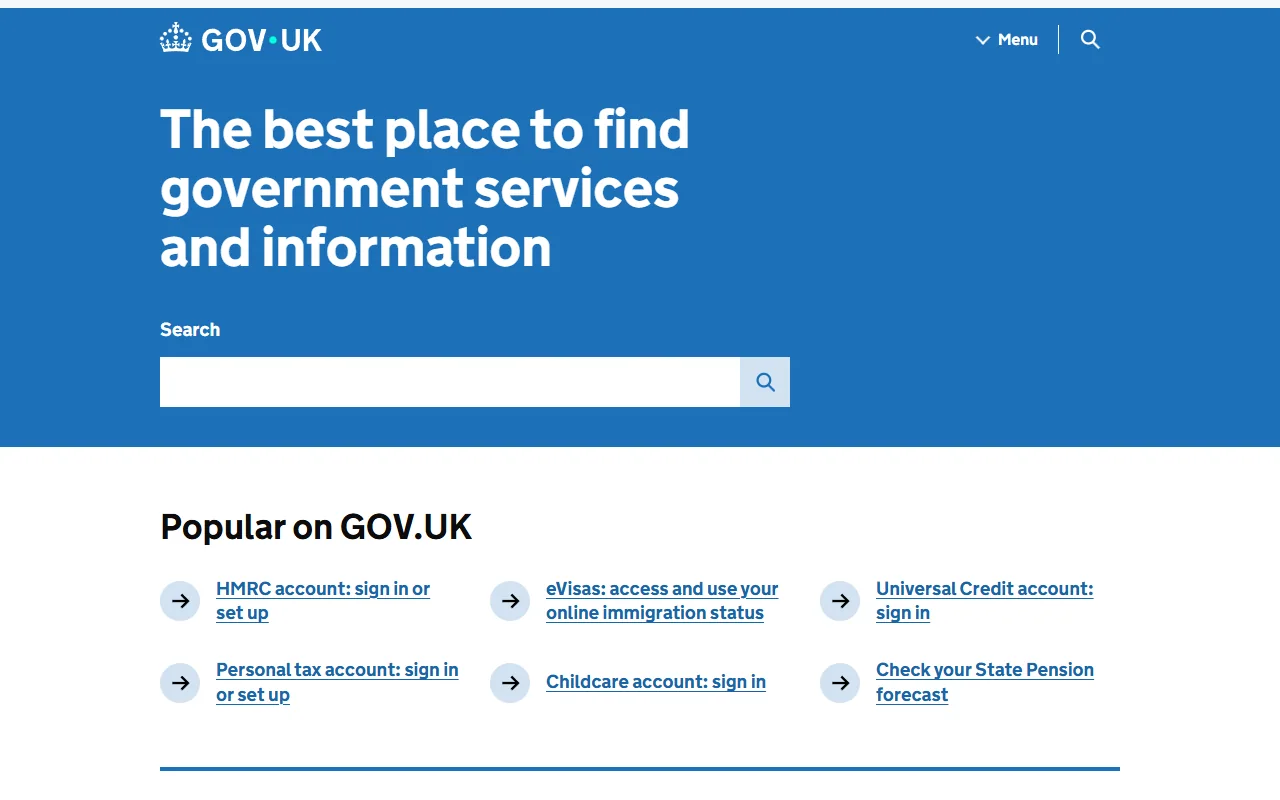
The homepage explains its purpose before offering routes by need.
Source · GOV.UK
Supported byGOV.UK: defining user needs
Why the org chart does not work as navigation
Homepages that open with abstract claims force visitors to guess. Every second of uncertainty makes exploration or contact less likely.
How to order promise, proof, and paths

Order the page around real visitor questions. Prioritize clarity, proof, and navigation before visual effects.
Implementation checklist
- Open with the offer, audience, and concrete outcome.
- Present primary routes without crowding the menu.
- Place proof near every important claim.
- Explain the process and answer common objections.
- End each block with a coherent next step.
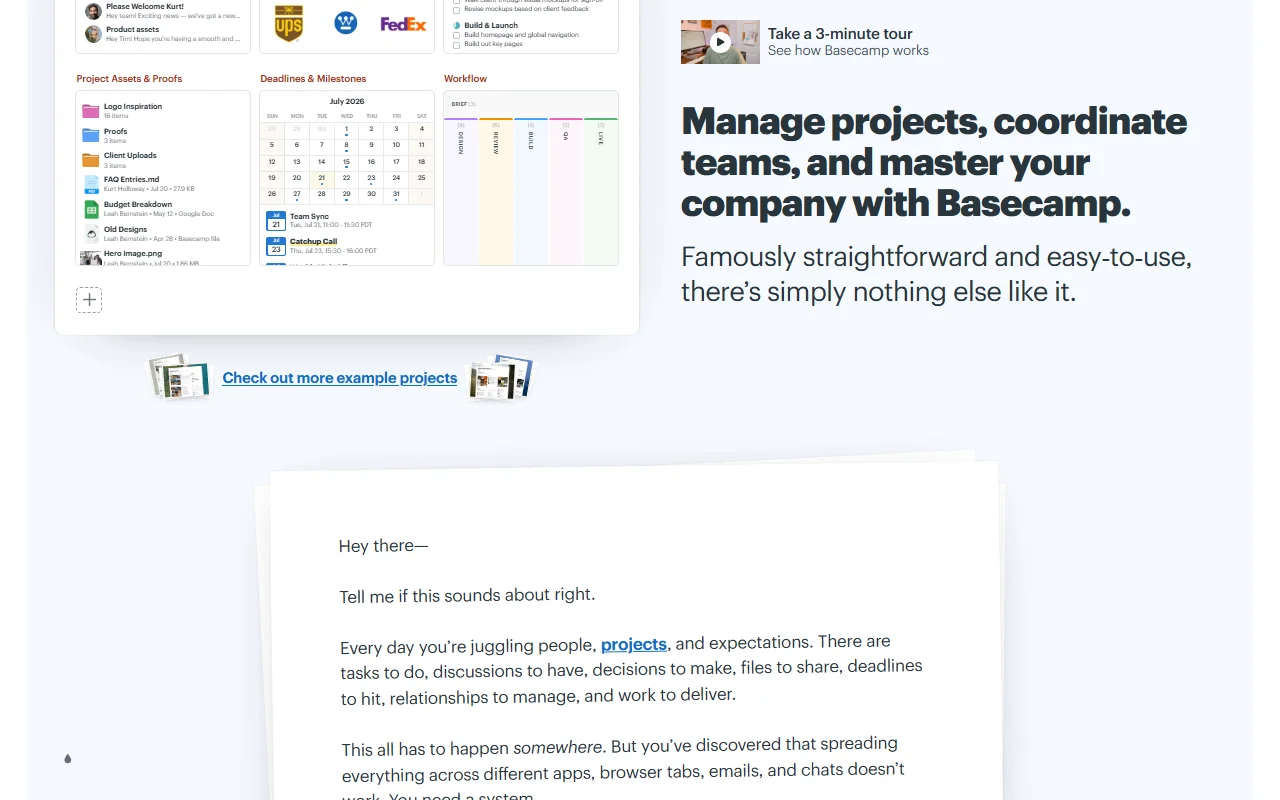
A specific offer and a next step can be read in the same block.
Source · Basecamp
Supported byNielsen Norman Group: usability heuristics
What homepage behavior reveals
Measure clicks to primary routes, depth, conversion, internal searches, session recordings, and questions that still reach sales.
Organize the homepage around questions
A homepage should answer what you offer, for whom, and what happens next within seconds. A clever line that forces people to scroll before understanding the business is in the wrong place.
Follow the promise with proof and paths to the main tasks. The order should reflect visitor questions, not the company org chart.
Review recordings and internal searches for gaps. If many people look for pricing or examples, give them a visible route.
Recommended opening sequence
- Promise and primary action.
- Relevant, verifiable proof.
- Paths by need or service.
- Objections and the next step.
Supported byStanford: web credibility guidelines
Quick execution map
| Element | What to review | Quality signal |
|---|---|---|
| Intent | A homepage should say what you do, who it is for, why visitors should trust you, and what to do next, with clear routes to primary offers. | The answer is clear within seconds. |
| Implementation | Order the page around real visitor questions. Prioritize clarity, proof, and navigation before visual effects. | There is one concrete and assignable action. |
| Measurement | Measure clicks to primary routes, depth, conversion, internal searches, session recordings, and questions that still reach sales. | The data should change a decision. A report with no action adds work. |
Frequently asked questions
What does homepage structure mean in practice?
A homepage should say what you do, who it is for, why visitors should trust you, and what to do next, with clear routes to primary offers.
What is a sensible first step for homepage structure?
Open with the offer, audience, and concrete outcome. Then continue with this action: Present primary routes without crowding the menu.
Which problem should homepage structure prevent?
Homepages that open with abstract claims force visitors to guess. Every second of uncertainty makes exploration or contact less likely.
How do you measure progress with homepage structure?
Measure clicks to primary routes, depth, conversion, internal searches, session recordings, and questions that still reach sales.