
WhatsApp needs commercial context

WhatsApp and CRM work together when each conversation stores source, intent, stage, owner, and next action.
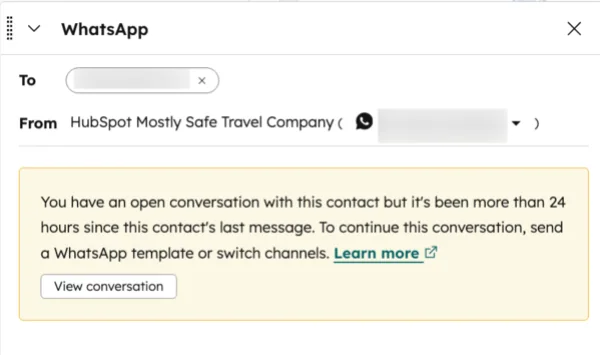
The notice preserves the existing conversation and recalls the 24-hour limit.
Source · HubSpot
When follow-up becomes noise
Without CRM, the team depends on memory and screenshots. That slows response and hides each channel's value.
How to record and continue each conversation

Define the minimum data WhatsApp should capture and how the pipeline updates after each interaction.
Implementation checklist
- Tag source, service interest, and urgency.
- Create simple stages for contact, qualification, proposal, and close.
- Prepare approved replies for common questions.
- Assign owners and reminders.
- Close the loop with won, lost, or pending outcomes.
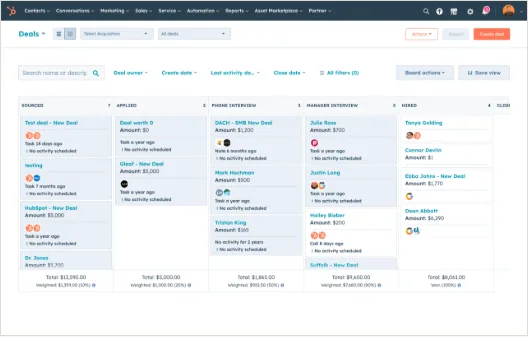
Each card occupies a visible follow-up stage.
Source · HubSpot
Supported bywebhooks for recording messages and statusesapproved templates for WhatsApp follow-up
Metrics for speed and quality
Measure response time, qualified conversations, booked meetings, sent proposals, and close rate by source.
WhatsApp needs memory and boundaries
The channel feels personal, which makes automated mistakes more visible. A wrong name, a promotion sent after purchase, or three agents asking the same question damages trust. The CRM should store consent, context, ownership, and the last action before messages are scheduled.
Separate service, sales, and marketing conversations. A person may accept an appointment confirmation without wanting weekly promotions. Recording purpose prevents the team from treating an available phone number as permission for every message.
When a person takes over, they need a short summary and the relevant history. Making the customer repeat budget, problem, and timing proves that the integration serves the system rather than the person writing. Design the handoff before increasing volume.
Minimum data for responsible follow-up
- Source, date, and purpose of consent.
- Current owner and the dated next action.
- Summary of the problem, offer, and relevant objections.
- Conditions to pause, close, or opt the contact out.
Supported bybest practices for marketing messages
Quick execution map
| Element | What to review | Quality signal |
|---|---|---|
| Intent | WhatsApp and CRM work together when each conversation stores source, intent, stage, owner, and next action. | The answer is clear within seconds. |
| Implementation | Define the minimum data WhatsApp should capture and how the pipeline updates after each interaction. | There is one concrete and assignable action. |
| Measurement | Measure response time, qualified conversations, booked meetings, sent proposals, and close rate by source. | The data should change a decision. A report with no action adds work. |
Frequently asked questions
What does WhatsApp CRM mean in practice?
WhatsApp and CRM work together when each conversation stores source, intent, stage, owner, and next action.
What is a sensible first step for WhatsApp CRM?
Tag source, service interest, and urgency. Then continue with this action: Create simple stages for contact, qualification, proposal, and close.
Which problem should WhatsApp CRM prevent?
Without CRM, the team depends on memory and screenshots. That slows response and hides each channel's value.
How do you measure progress with WhatsApp CRM?
Measure response time, qualified conversations, booked meetings, sent proposals, and close rate by source.