What is worth automating

In many growing companies, sales processes live across WhatsApp, Instagram, forms, calls, and spreadsheets. Marketing automation works when it organizes that journey and prevents leads from getting lost between channels.
Before choosing software, the brand must define stages, quality criteria, messages, response times, and ownership. Automating a confused process only makes the confusion arrive faster.
Supported byresponds quickly
The cost of speeding up a broken process
For B2B, services, education, health, real estate, local retail, and tourism businesses, WhatsApp is often where real objections get resolved. Connecting it to CRM records context, assigns follow-up, and measures which conversations create revenue.
The point is not to answer everything with bots. The point is to use automation to classify intent, answer repeated questions, remind next steps, and hand off to humans when judgment matters.
Useful starter flows
- Lead capture from a form, ad, or landing page.
- Initial message with offer context and a qualifying question.
- Automatic assignment by service, city, budget, or urgency.
- Reminder for a meeting, proposal, or pending payment.
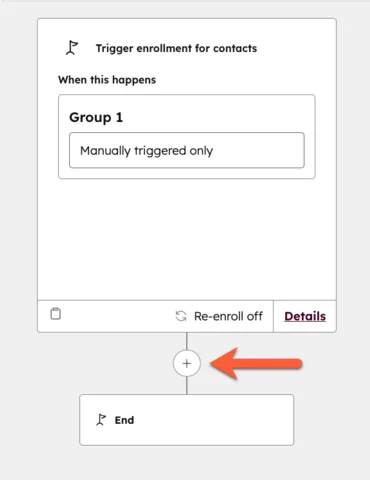
Every action should have a clear role in the follow-up process.
Source · HubSpot · Create workflows
Supported byfollow-up is inconsistent
A flow sales and marketing can follow

AI can accelerate responses, summaries, and classification, but it needs clear rules: tone, limits, approved knowledge, allowed data, and moments where it must escalate to a person.
A branded AI agent should not improvise promises. It should use approved content, keep traceability, and respond usefully without breaking trust. Good automation feels fast; bad automation feels careless.
Metrics for monitoring automation
Automation should not be measured only by messages sent. Measure response speed, qualified leads, booked meetings, conversions, satisfaction, recovered opportunities, and operating time saved.
When the system is designed well, marketing, sales, and support stop operating as disconnected areas. The customer feels continuity and the team can see where demand is won or lost.
Automate forgotten work, not the relationship
The best first use cases are often quiet. Creating a task when a lead arrives, alerting the team when nobody replies, and stopping a sequence after a meeting solve real failures. A bot that tries to run the entire sale on day one adds risk before the basic process is clean.
Draw the current flow using recent examples. Include who receives the contact, what information they need, how long they wait, and what happens when data is missing. Exceptions matter. If the automation cannot handle them safely, it should send them to a person instead of guessing.
Every automated message needs an exit condition. A reply, purchase, unsubscribe request, or stage change should stop messages that no longer make sense. This rule sounds obvious, but it separates timely follow-up from a brand that refuses to listen.
Before activating a workflow
- Test with a new, duplicate, and incomplete contact.
- Define who receives exceptions and the response time.
- Confirm that replies and conversions stop later messages.
- Keep a log that can explain every automated action.
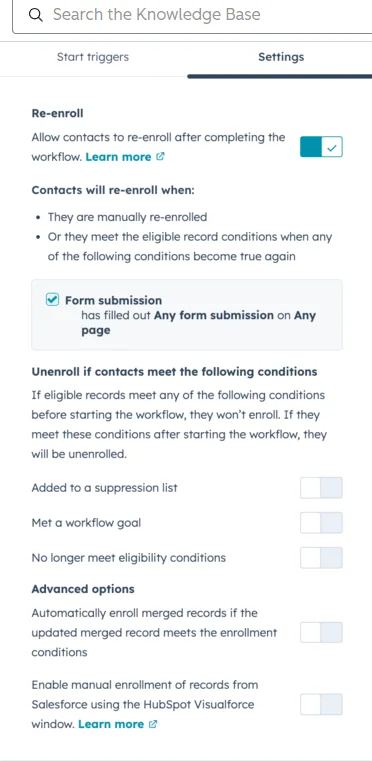
Define who re-enters and when a contact should leave before enabling the workflow.
Supported bymarketing automation
Recommended automation flows
| Flow | Goal | Brand safeguard |
|---|---|---|
| Lead to CRM | Stop losing contacts | Capture source, intent, and permission |
| Initial WhatsApp | Respond fast | Use clear, non-invasive tone |
| Qualification | Prioritize opportunities | Ask only what is needed |
| Follow-up | Recover pending decisions | Avoid spam and respect timing |
| Assisted AI | Scale service without overwhelming the team | Use approved knowledge and human handoff |
Frequently asked questions
What is marketing automation?
It is the design of flows that connect data, channels, and actions to attract, qualify, nurture, and follow up with prospects or customers with less manual work.
Should WhatsApp be connected to the CRM?
Yes, if it is a relevant commercial channel. Connecting it to CRM helps measure source, history, stage, owner, and outcome for each conversation.
Can AI respond to customers?
It can in controlled cases: FAQs, qualification, scheduling, or follow-up. Sensitive or high-value topics should include clear escalation rules for humans.
What should a small business automate first?
Usually lead capture, initial response, CRM registration, and follow-up reminders. It is simple, measurable, and reduces immediate leakage.