A digital strategy with real priorities

For a small business, digital strategy should answer a simple question: how do we turn attention into conversations, sales, or repeat purchase in a repeatable way? If the plan only lists channels, it is not strategy yet.
The starting point is deciding each asset's role: the website explains and converts, content educates and builds trust, paid media accelerates demand, CRM organizes follow-up, and automation prevents leakage.
Why disconnected tactics drain the budget

A website that converts does not depend on big animations or oversized lines. It depends on clarity: what you sell, who it is for, why it matters, what proof supports it, and what the next step is.
UX should reduce doubt. Simple menus, service pages, visible CTAs, short forms, speed, responsive design, and scannable content usually matter more than decorative complexity.
Minimum elements of a commercial website
- A visible value proposition in the first viewport.
- Services or products explained through the problem they solve.
- Trust proof: cases, reviews, logos, metrics, or process.
- A clear CTA to a form, call, WhatsApp, or calendar.
A commercial page connects a specific task to the next step.
Source · Calendly · Sitio oficial
Supported byevidence on digital maturity in SMEs
How to choose the next move
Small businesses lose opportunities when they treat someone just discovering the problem the same as someone ready to request a quote. A simple funnel creates different paths for learning, comparing, and deciding.
The funnel does not need to be complex. It can start with SEO content, a service landing page, a form, an automated response, CRM registration, and follow-up through WhatsApp or email.
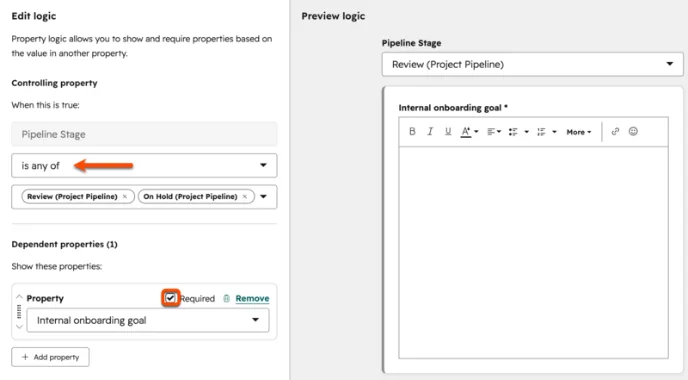
Each stage can require the information needed for follow-up to progress.
Source · HubSpot · Pipeline settings
Supported bya practical structure for a business plan
Indicators for a small business
Metrics should connect marketing to business: lead source, quality, contact rate, meetings, proposals, sales, and decision cycle. If we only measure likes or traffic, we optimize activity, not growth.
A good digital strategy leaves a minimum dashboard to learn every month: which channel attracts better demand, which page converts, which objection repeats, and which automation recovers opportunities.
Strategy can fit into a list of decisions
A small business does not need ten active channels to look serious. It needs to know which customer it wants, which offer takes priority, and which journey it can operate well. Choosing one primary channel and one support channel often produces more learning than spreading budget across five weak efforts.
Start with the constraint that actually limits growth. If leads are scarce, work on demand. If contacts are a poor fit, fix the message and targeting. If opportunities disappear because follow-up fails, another campaign will only fill a broken process faster.
Review strategy monthly with one concrete question. What decision changed because of the data? If the meeting only updates numbers, the dashboard has become decoration. A living strategy keeps few priorities and explains what was deliberately left out.
One page to govern the quarter
- Write the goal with a number, date, and owner.
- Name the main constraint and the evidence behind it.
- Assign one weekly action to web, content, and follow-up.
- Define the result that will keep, change, or stop each action.
Supported bycybersecurity resources for small businesses
Minimum digital architecture for small businesses
| Asset | Role in the funnel | What to optimize |
|---|---|---|
| Home | Orient and build trust | Core message and CTA |
| Service page | Convert specific intent | Proof, offer, and form |
| Blog/SEO | Capture informational searches | Useful content and internal links |
| CRM | Follow up with opportunities | Stages, owners, and reminders |
| Automation | Prevent leakage | Initial response and next steps |
Frequently asked questions
What should a digital strategy for small businesses include?
It should include business goal, audience, positioning, website, content, SEO, campaigns, CRM, automation, metrics, and a realistic improvement calendar.
What is a conversion funnel?
It is the path that takes a person from discovery to decision. It includes content, pages, messages, forms, follow-up, and proof points.
Should a business invest first in web or social media?
It depends, but the website should usually be clear enough before scaling traffic. Social can attract attention, but the site often organizes trust and conversion.
How long does a digital strategy take to work?
Some conversion improvements can appear in weeks. SEO, brand, and content systems usually need several months of consistency and optimization.